

India is not only a strategic growth market but also a key global manufacturing and tech hub
This year growth may be slightly challenging because of the increase in memory and RAM costs, says Akis Evangelidis, co-founder and India president of 'Nothing' smartphone brand
Akis Evangelidis, co-founder and India president, 'Nothing'
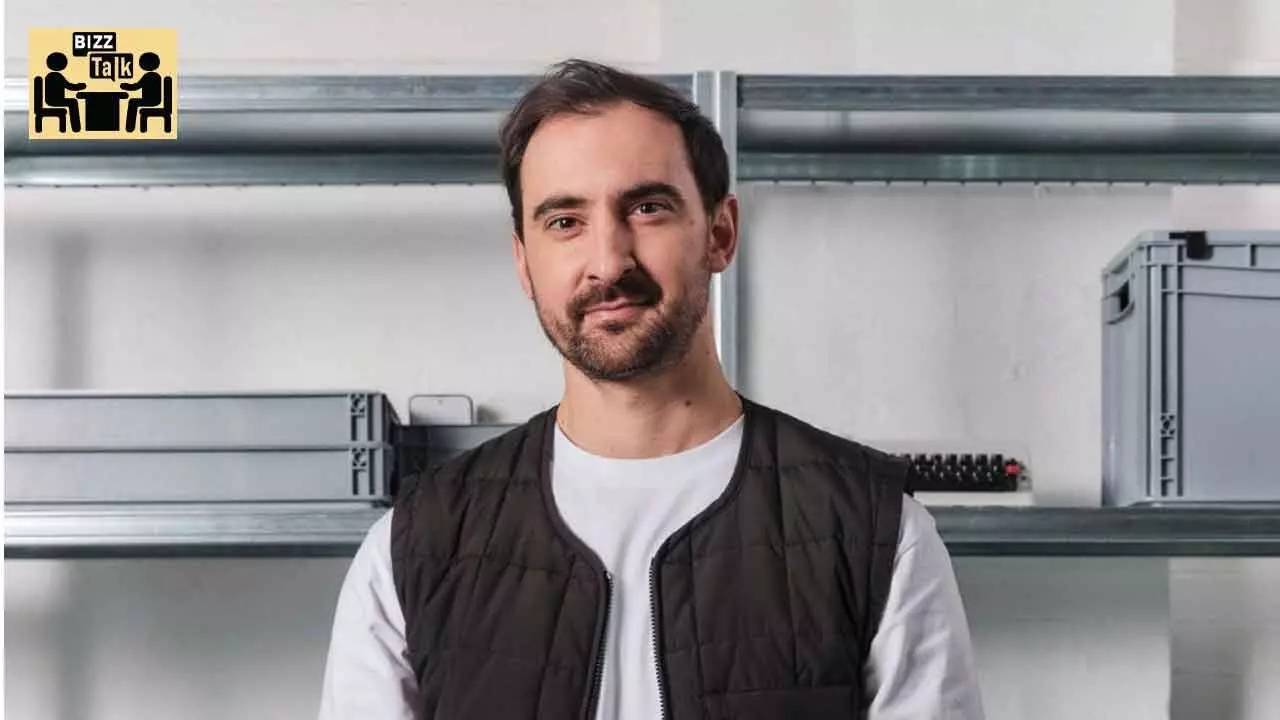
In the plush conference room of their newly inaugurated experience centre in Kolkata, amid the hum of a city that has long married intellect with industry, Akis Evangelidis — co-founder and India President of 'Nothing', a London-based consumer technology company, co-founded in 2021 by OnePlus alumni Carl Pei, focused on transparent, minimalist design and the unique LED-based "Glyph Interface"-- speaks with measured conviction about ambition, scale and belief.
India, he says, is not merely a market of 750 million smartphone users; it is the crucible shaping the company’s global future. In conversation with Bizz Buzz, Evangelidis reflects on surging component costs, the shifting economics of the sub-Rs 20,000 segment, and Nothing’s refusal to join the relentless specification race.
Instead, he outlines a strategy anchored in design, software and aspiration — one that sees India not only as its fastest-growing arena, but as an emerging manufacturing and technology powerhouse poised to define the next decade of consumer innovation
How big is the smartphone market in India at present?
Overall, there are around 750 million smartphone users in India. It is a very large market. This year, growth may be slightly challenging because of the increase in memory and RAM costs. Last year at this time, RAM cost was around $20. Now it is about $60, and it may go up to $100.
Because memory prices are increasing, products are becoming more expensive. Growth could still be in double digits, but especially in the sub-Rs 20,000 segment, there may be de-growth because fewer products will launch at that price point due to high memory costs.
When do you expect a correction in the market?
I do not know. For us, we will continue to grow. We have been the fastest-growing smartphone brand in India for the last two years. Over the last eight quarters, Nothing has been the fastest-growing brand for seven quarters.
We have never entered the race of offering only the best specifications at the lowest price. Our focus has always been on user experience, design, and software. The response in India has been tremendous.
How has your growth been compared to India, overall?
India has been at the forefront of our growth globally. We opened our first store in Bengaluru nine days ago. On the first day, 2,000 people visited the store. In the last nine days, 10,000 people have come through the doors. India has been very supportive.
We see India not only as a strategic growth market but also as a key global manufacturing and technology hub. India is on the verge of becoming what China was around 10 years ago, when many new consumer technology brands flourished.
In 2014, about 90 per cent of smartphones sold in India were imported. Today, 99 per cent of smartphones sold in India are manufactured domestically. The government is also working to deepen the supply chain so that more components are produced locally.
Can India become a global manufacturing hub for your company?
We are already exporting from India. We started exports last year, mainly to the US and Europe. We have signed a joint venture with Optimus, under which we will invest over $100 million in the next three years. This will significantly drive our export growth.
How many manufacturing bases do you have globally?
We have two — India and China. We are not looking at additional manufacturing locations. Instead, we plan to strengthen and expand our manufacturing and product development capabilities in India.
Will India also become a hub for technology and design, or only manufacturing?
Manufacturing is the first step. India has a strong engineering talent pool. Companies like Qualcomm and Nokia have their largest engineering teams in India. Over time, we aim to build full product capabilities in India, including research and development.
When we first ramped up manufacturing in India, we faced challenges, such as dust particles in early batches due to our transparent design. However, innovation and process improvements helped us reach very high standards. Last year, we even began producing and exporting our flagship products from India.
How do you position your products — premium, upper market, or across all segments?
We position ourselves as an aspirational brand. Many brands in India have focused only on value for money. However, with India’s rapid economic growth — from a $1 trillion economy in 2007 to $3–4 trillion now, and projected to reach $8 trillion by 2030 — consumer aspirations are changing.
Our products offer a premium design and experience but remain more accessible compared to brands like Apple and Samsung. Most of our users are below 25 years old. Software and user experience are the main reasons customers choose our products.
We avoid the constant specification race. Instead, we focus on building loyalty. When we entered India, customers were considering up to seven brands before purchasing. There was little brand loyalty. We have worked to change that.
What about future innovations?
This year, we are launching our first AI hardware product. AI will finally enable the IoT ecosystem that the industry has discussed for years. Smartphones are just the gateway. We are gradually building a broader product ecosystem.
How many stores are you planning across India?
We are expanding offline aggressively. We already have over 10,000 partner stores and aim to reach 15,000 by the end of this year. We will have more than 500 service centres across India by year-end. This Kolkata centre is our sixth exclusive service centre.
We follow a phased approach — first through partner stores, then priority desks, and finally exclusive service centres as the user base grows. Online remains important, but the hybrid model works best. Customers value the touch-and-feel experience, especially for smartphones. Our stores also help communicate our brand story effectively.
How are you increasing brand visibility?
We have announced our main title sponsorship with RCB. Previously, we collaborated with Ranveer Singh and Rashmika Mandanna.
We are highly active on social media and have the highest engagement levels among smartphone brands. We create native digital content that resonates strongly with young audiences.
Are you expanding into accessories?
Yes, audio products such as earbuds and headphones are an important part of our portfolio. Audio is a strong growth opportunity in India, and some of these products are also being locally manufactured as part of our joint venture.
How do you see Tier-2 and Tier-3 cities growing?
Growth is happening across India. Tier-2 and Tier-3 cities are progressing rapidly. We run a community review programme where we loan devices to young content creators. Many young users in these cities are highly engaged with our brand.
Smartphone usage among children is starting at a very early age. Is that a concern?
It can be too early. I have three young daughters and try to delay their phone usage as much as possible.
However, smartphones play an important role in education, entrepreneurship, and content creation. They provide access to knowledge and opportunities. The key is healthy and responsible usage.





